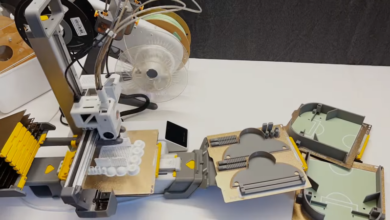

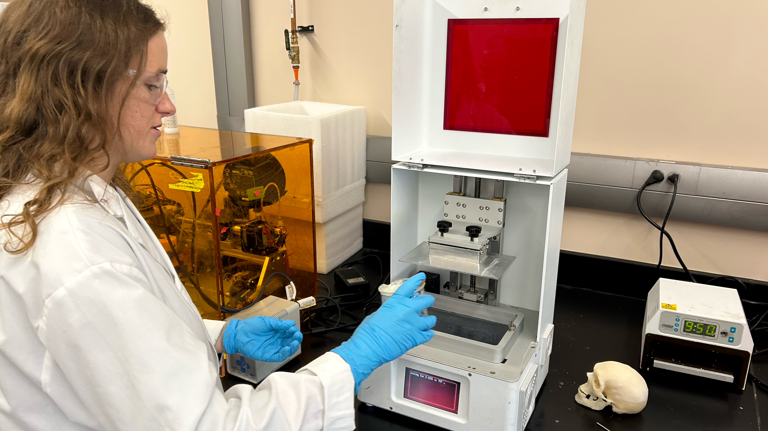
A team at the University of Waterloo is pioneering an innovative approach to synthetic bone creation that has the potential to enhance the quality of life for cancer and trauma patients. The development revolves around a biocompatible material that can be 3D-printed to replace damaged bone, which naturally dissolves as the body regenerates bone tissue.
Thomas Willett, an associate professor of biomedical engineering at the university, conceived the idea during his time at Mount Sinai Hospital in Toronto. Reflecting on his experience, Willett explained, “I worked with orthopedic surgeons there and became exposed to the issue of large bone defects that do not heal on their own.” While typical bone fractures can mend naturally, patients suffering from bone cancer or severe trauma face greater challenges in bone repair.

The Potential of 3D-Printed Bones
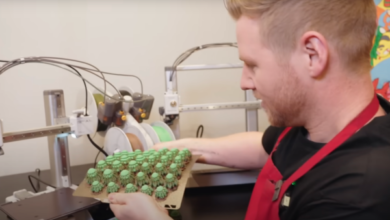
The substance developed by Willett’s team is unique because it doesn’t contain cellular material, which lowers the risk of rejection by the body. Additionally, the synthetic bone has a texture similar to pancake batter and is composed of biopolymers, including soybean oil and hydroxyapatite—an essential mineral found in natural bones.

(Image Credit: Krista Sharpe/CTV News)
The printed material is designed to dissolve within the body over time, allowing new bone to grow in its place. As Professor Maud Gorbet, a colleague on the project, noted, this approach has the potential to reduce the number of surgeries required, lowering healthcare costs and improving patient outcomes.
Future of Bone 3D Printing
Currently, the researchers are printing small-scale bones and skulls to evaluate the material. Graduate student Elizabeth Diederichs, who is working on the project, emphasized the material’s flexibility: “This technology is fairly new, and as it develops, we’re gaining more capabilities.”
While it will take years and substantial funding before this technology is ready for hospital use, the team is preparing for clinical trials and aims to continue scaling up their efforts.
For now, the University of Waterloo remains at the forefront of 3D-printed medical innovation, with their research offering a promising outlook for patients who require complex bone reconstruction.
Source: kitchener.ctvnews.ca